
The Real Reason Time Management Fails for Most People

For a long time, we have been told that success depends on one thing: managing time better.
Wake up early.
Plan your day.
Fill every hour with tasks.
Be productive from morning to night.
Why Time Management Is Overrated — and Energy Management Works Better
Time management advice is everywhere. Books, podcasts, apps, and motivational posts repeat the same message: if you’re struggling, you’re probably not using your time well.
But here’s an uncomfortable truth many people quietly feel:
Even with good planning, we still feel tired, distracted, and overwhelmed.
We have time — yet we don’t have the strength to use it well.
That’s where the real issue begins.
Time Is Not the Real Problem

Everyone gets the same 24 hours in a day. No one gets extra time. Not students, not CEOs, not creators. Yet the difference between people who thrive and people who burn out is not time. It is energy.
You can block two hours for important work, but if your mind feels heavy and your body feels drained, those two hours achieve very little. You may sit at your desk, stare at the screen, and feel guilty for “wasting time.”
In reality, you didn’t waste time. You lacked energy.
Time management assumes that all hours are equal. Human experience proves they are not.
Why Time Management Often Fails in Real Life
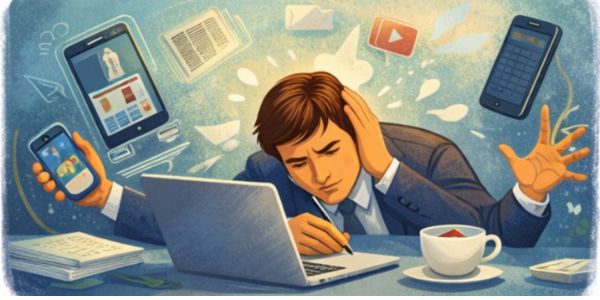
Time management systems are built on a flawed idea: that humans can operate at the same level all day.
We can’t.
Some hours we feel sharp and focused.
Some hours we feel slow and foggy.
Some days we feel motivated.
Some days we feel empty.
Time management ignores this natural rhythm.
It pushes us to follow schedules instead of listening to ourselves. When we fail to meet those schedules, we blame our discipline instead of questioning the system.
Over time, this creates pressure, guilt, and burnout.
Busy Does Not Mean Productive
One of the biggest problems with time management is that it rewards busyness. Meetings, emails, messages, notifications — they fill the day and make us feel active. But activity is not the same as progress.
You can spend an entire day “working” and still move nowhere meaningful. Energy management, on the other hand, focuses on impact, not hours.
One clear, focused hour with good energy can create more value than an entire tired day.
What Energy Management Really Means
Energy management is not about working less or avoiding responsibility. It is about working in alignment with your natural capacity.
It means:
Doing deep work when your energy is high
Doing simple tasks when energy is low
Resting before exhaustion turns into burnout
Treating your body and mind as partners, not machines
Energy management respects the fact that productivity is human, not mechanical.
The Different Types of Energy That Shape Our Days
Energy is not just physical. It has many layers.
Physical Energy
This comes from sleep, food, hydration, and movement.
Without physical energy, motivation disappears quickly.
No planner can replace rest.
Mental Energy
This is your ability to focus and think clearly.
Constant switching between tasks, endless scrolling, and information overload drain it silently.
That’s why we often feel “busy but unfocused.”
Emotional Energy
Stress, anxiety, unresolved feelings, and emotional pressure consume energy even when we are doing nothing physically.
Emotional fatigue is real — and invisible.
Purpose Energy
When work feels meaningful, energy rises naturally.
When it feels pointless, even small tasks feel heavy.
Purpose fuels endurance.
Why Energy Management Works Better
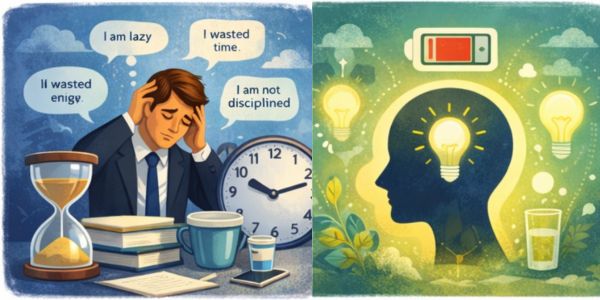
Energy management works because it matches reality. Instead of forcing productivity, it supports it.
When you manage energy:
You work with less resistance
You experience less burnout
You produce better quality work
You recover faster after effort
Most importantly, you stop fighting yourself.
Imagine two people with the same job. One works long hours, pushes through fatigue, follows strict schedules, and feels constantly drained.
The other works fewer hours but protects sleep, limits distractions, and does important work when energy is highest.
The second person often produces better results — not because they work harder, but because they work smarter with their energy.
How to Start Managing Your Energy (Without Overcomplicating It)
Energy management does not need complex systems.
Start with awareness.
Notice when you feel most alert.
Notice when you feel tired.
Notice what drains you and what restores you.
Protect sleep.
Stop multitasking.
Take real breaks, not digital ones.
Do meaningful work before shallow tasks.
Small changes compound quickly.
Why the World Still Obsesses Over Time
Time is easy to measure.
Energy is personal and invisible.
Schools, offices, and systems prefer structure over understanding. It’s easier to count hours than to support human well-being.
But ease does not equal effectiveness.
A More Human Way to Work and Live
Energy management accepts a simple truth:
You are not lazy.
You are not broken.
You are human.
Some days you move fast.
Some days you need rest.
Listening to that rhythm is not weakness.
It is intelligence.
Final Thought
You don’t need more time. You need better energy. When energy is right, time stretches. When energy is low, time collapses.
Instead of asking,
“How can I manage my time better?”
Try asking,
“How can I protect my energy today?”
That question changes everything.